When shipping perishables like food, pharmaceuticals, or meal kits, choosing the right cold packs for shipping can make or break your product integrity and customer satisfaction. In 2026, businesses have more cold chain options than ever, but each comes with trade-offs in performance, cost, environmental impact, and logistics complexity.
This guide compares four main types of cold packs for shipping (gel packs, water packs, dry ice, and reusable cold packs) to help businesses choose the best fit, whether you need cold packs for shipping food, ice packs for shipping meal kits, or coolants for pharma. We’ll also explain why water cold packs often offer the best ROI for chilled (not frozen) shipping, and how solutions like Relocalize make this scalable and sustainable.
[lab-report-banner]

Types of Cold Packs for Shipping
1. Gel Packs
What they are:
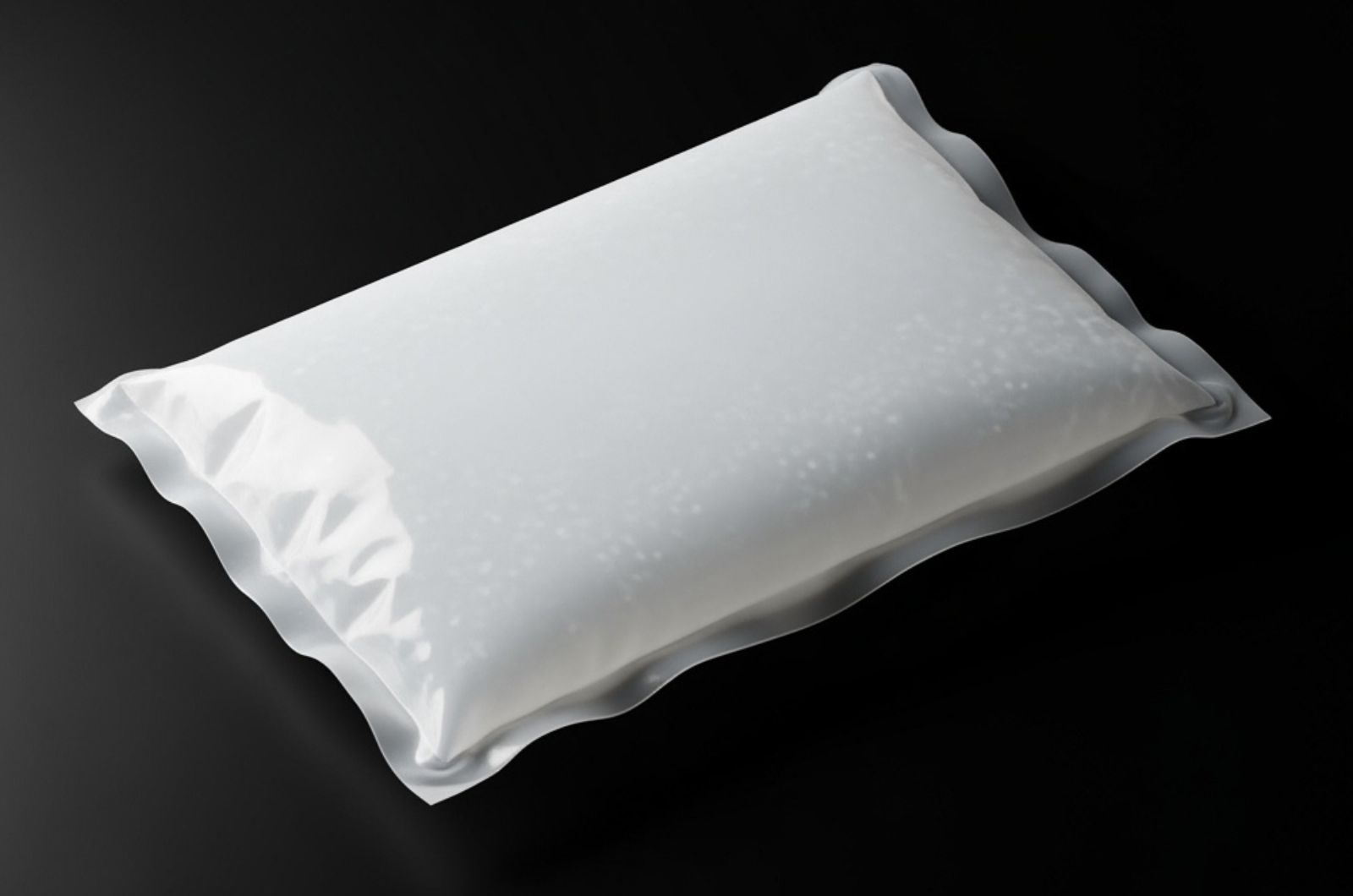
Flexible pouches filled with refrigerant gel designed to maintain refrigerated temperatures.
Best for:
24–48 hour chilled shipments (2–8 °C), with moderate handling.
Pros:
- Runs slightly colder than water in the first hours of a shipment
- Stays flexible, so it wraps around irregular items
- Not as heavily regulated as dry ice; safe to handle
Cons:
- Risk of gel leakage if punctured, which can contaminate the product, even if not toxic (see is the gel inside an ice pack toxic?)
- Higher cost per unit than frozen water
- Often non-recyclable or harder to dispose of cleanly
2. Water Packs (Ice Packs)
What they are:
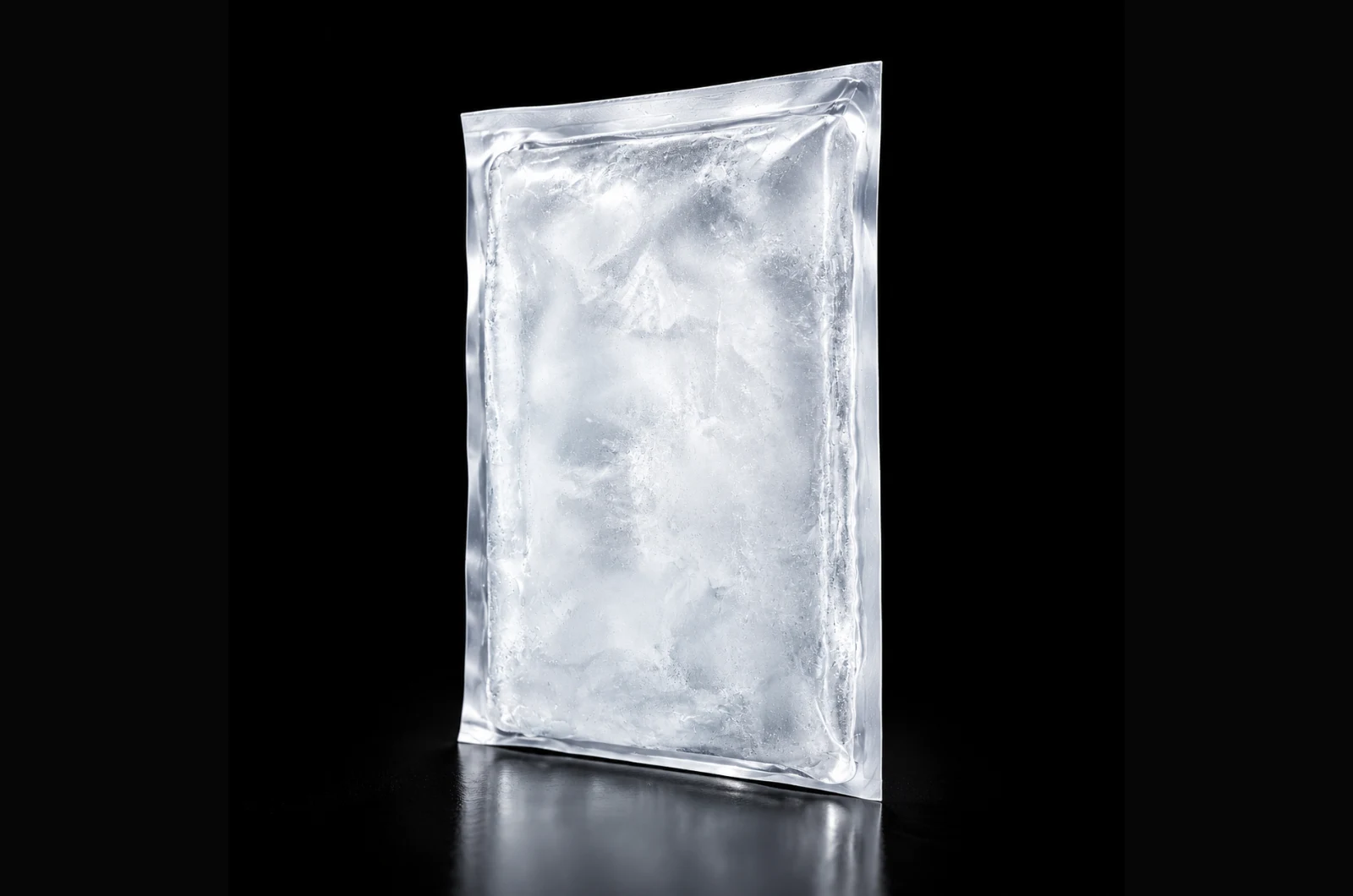
Pouches filled with frozen water or ice, ideal for keeping chilled goods within the 2–8 °C range. These are the classic ice packs for shipping.
Best for:
Short to long-duration chilled shipments, including 72-hour transits.
Pros:
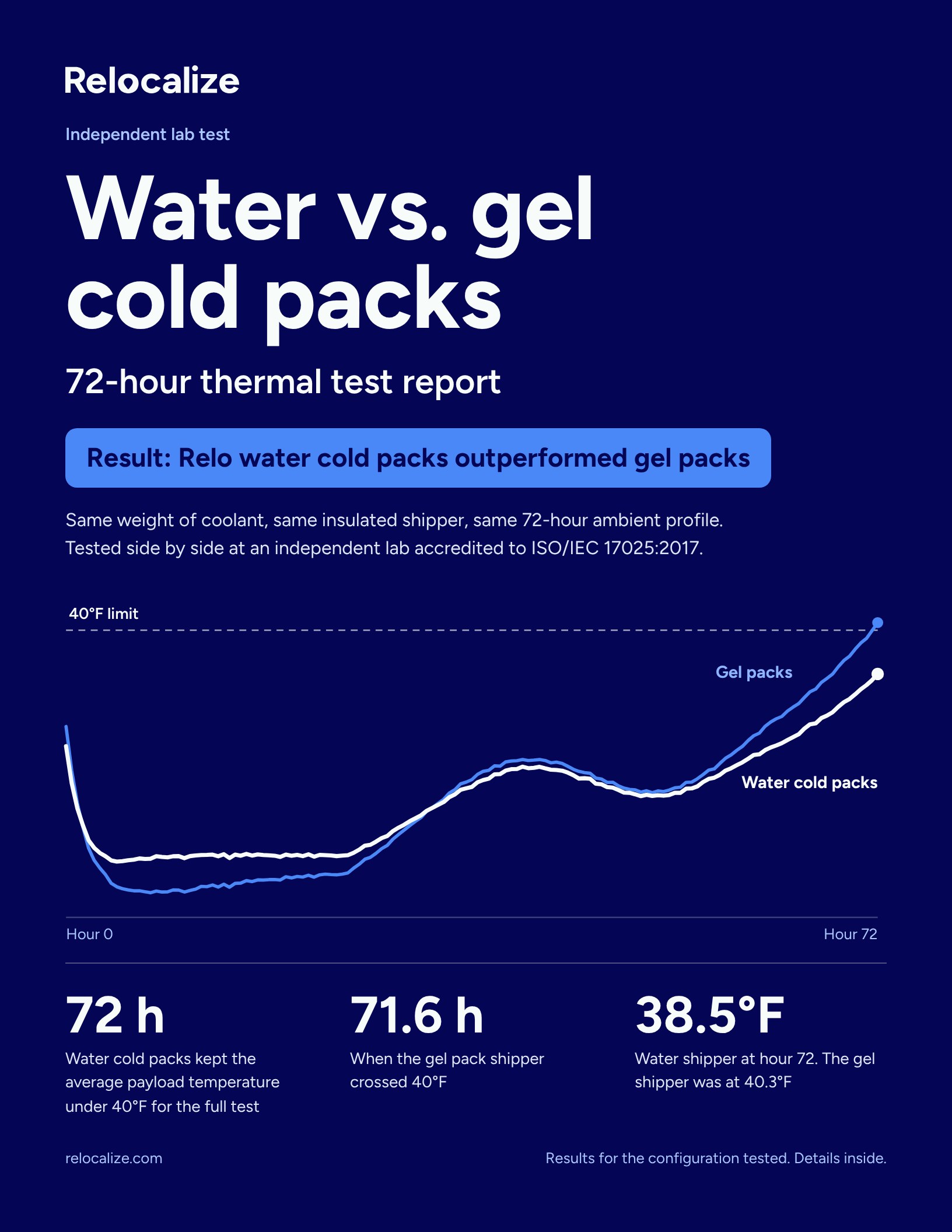
- Stayed below 4 °C (40 °F) for all 72 hours in a third-party lab test, longer than synthetic gel packs*
- Significantly lower cost than gel packs
- Safer and simpler disposal (just water)
- No toxicity or regulatory concerns
Cons:
- Freeze rigid, so they sit best flat on the top and bottom of the payload
*Controlled third-party test using meal kit containers, conducted by an ISO/IEC 17025:2017 accredited lab.
3. Dry Ice
What it is:
Solid carbon dioxide that sublimates at −78.5 °C, used for deep-freeze shipments.
Best for:
Frozen goods such as seafood, meats, or ice cream.
Pros:
- Delivers extremely low temperatures
- Provides long-duration freezing power
- Leaves no liquid residue (sublimates directly into gas)
Cons:
- Classified as hazardous, requires special handling
- Can overcool or damage products not meant to freeze
- Expensive
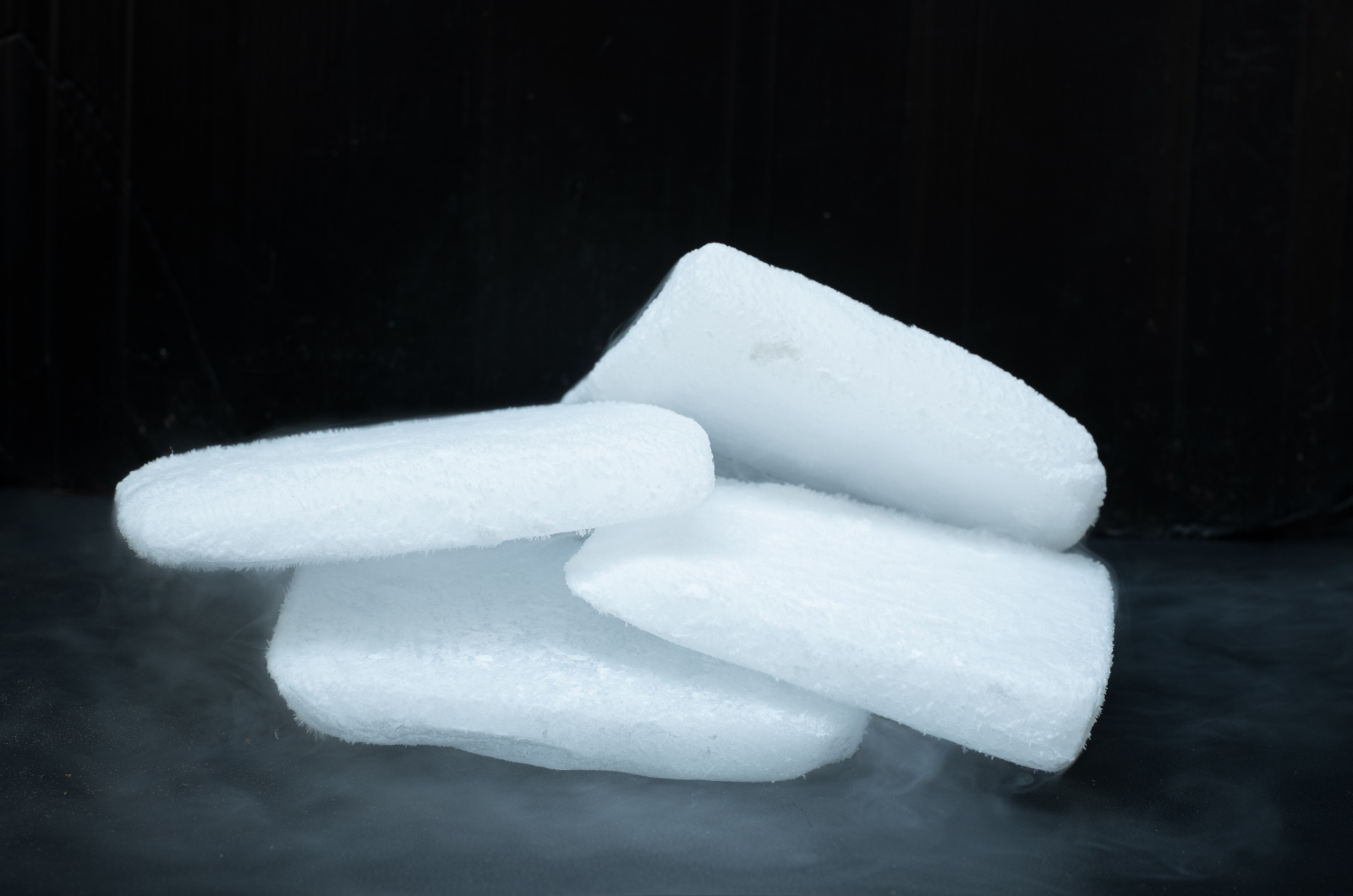
4. Reusable Cold Packs
What they are:
Durable gel or water-based packs designed for multi-use within closed logistics systems.
Best for:
Subscription services, pharma delivery, and B2B shipping with return logistics.
Pros:
- Low long-term cost if return rates are high
- Reduce waste from disposables
- Built for durability across many cycles
Cons:
- Require return logistics, cleaning, and refreezing infrastructure
- High upfront cost for implementation
- ROI suffers if return rates are low or inconsistent

Cold Pack Comparison Table
| Cold pack type | Best use | Cost | Eco impact | Ease of use | Cooling power | Logistics |
|---|---|---|---|---|---|---|
| Gel packs | Chilled | Medium | Moderate | Easy | Strong in the first hours | Simple |
| Water packs | Chilled | Low | Low | Very easy | Strong over long transitsHeld below 4 °C for 72 hours in a lab test | Very simple |
| Dry ice | Frozen | High | High | Complex | Excellent | Regulated and complex |
| Reusable cold packs | Chilled or frozen | Low over the long term | Low | Moderate | Variable | Infrastructure-heavy |
How to Choose a Cold Pack for Shipping
The right cold pack comes down to five questions. Work through them in order.
- Temperature range:
Chilled products (2–8 °C) call for water or gel packs. Frozen products that must stay below 0 °C call for dry ice. - Transit time:
The longer the trip, the more coolant and insulation you need. Water packs held below 4 °C for 72 hours in our lab test, which covers most ground shipping windows. - Box and payload size:
Coolant needs scale with box volume, insulation and how warm the payload is at pack-out. Ambient temperature on the route matters too (see what ambient temperature means in cold chain). - Disposal:
Your customer deals with the pack after delivery. Water packs can be cut open and drained, while gel usually goes to the trash (see how to dispose of gel packs). - Supply reliability:
Check how long your supplier takes to deliver frozen packs, and whether that can keep up when order volume jumps.
The most reliable way to choose is to test in your own box. You can request a free cold pack sample kit and run it in a real shipment.
Industry-Specific Cold Pack Recommendations
Food & Meal Kit Delivery
- Recommended: Water packs or gel
- Why: Low cost, safe for chilled items. Ideal for scalable use in D2C fulfillment.
- Learn more: cold packs for shipping meal kits and ready-to-eat food

Pharmaceuticals at chill range
- Recommended: Water packs or gel
- Why: Sufficient thermal stability and safe for pharma use (see pharmaceutical cold chain packaging best practices)

Frozen Food / Ice Cream
- Recommended: Dry ice
- Why: Maintains required ultra-low temperatures. Use dry ice for sub-zero shipments.
If you are looking for the best ice packs for shipping frozen food, dry ice is usually the answer. Water and gel packs hold around 0 °C as they melt, so they can’t keep products frozen solid for long.
Dairy, Cheese, Specialty Items
- Recommended: Water packs or gel
- Why: Avoid freezing, maintain stable 2–8 °C range.

Subscription Services
- Recommended: Reusable cold packs (if returns feasible)
- Why: Lower total cost over time with environmental benefits. Choose reusable cold packs for recurring delivery models.
Why Water Cold Packs Offer the Best ROI for Chilled Shipping
Water cold packs stand out as a cost-effective, safe, and scalable solution, especially when shipping items that need to be kept cool (but not frozen). Here’s why:
- Extremely low cost (just water)
- Held below 4 °C longer than synthetic gel packs in a third-party lab test
- Safe for food & pharma, with no chemical additives
- Simple disposal
- Avoid overcooling, ideal for 2–8 °C products
- No regulatory barriers, unlike dry ice
For most chill-range products, water cold packs strike the perfect balance between simplicity, performance, and affordability.
A Faster Cold Pack Shipping Solution with Relocalize
To get the most out of water cold packs, fulfillment centers need frozen packs on hand when order volume jumps. In a conventional supply chain, packs are made at a plant, trucked to a third-party cold storage warehouse to be frozen, then trucked again to the fulfillment center. Ordering through that chain typically takes 32 to 53 days, and most fulfillment centers have little space to store extra cold packs.
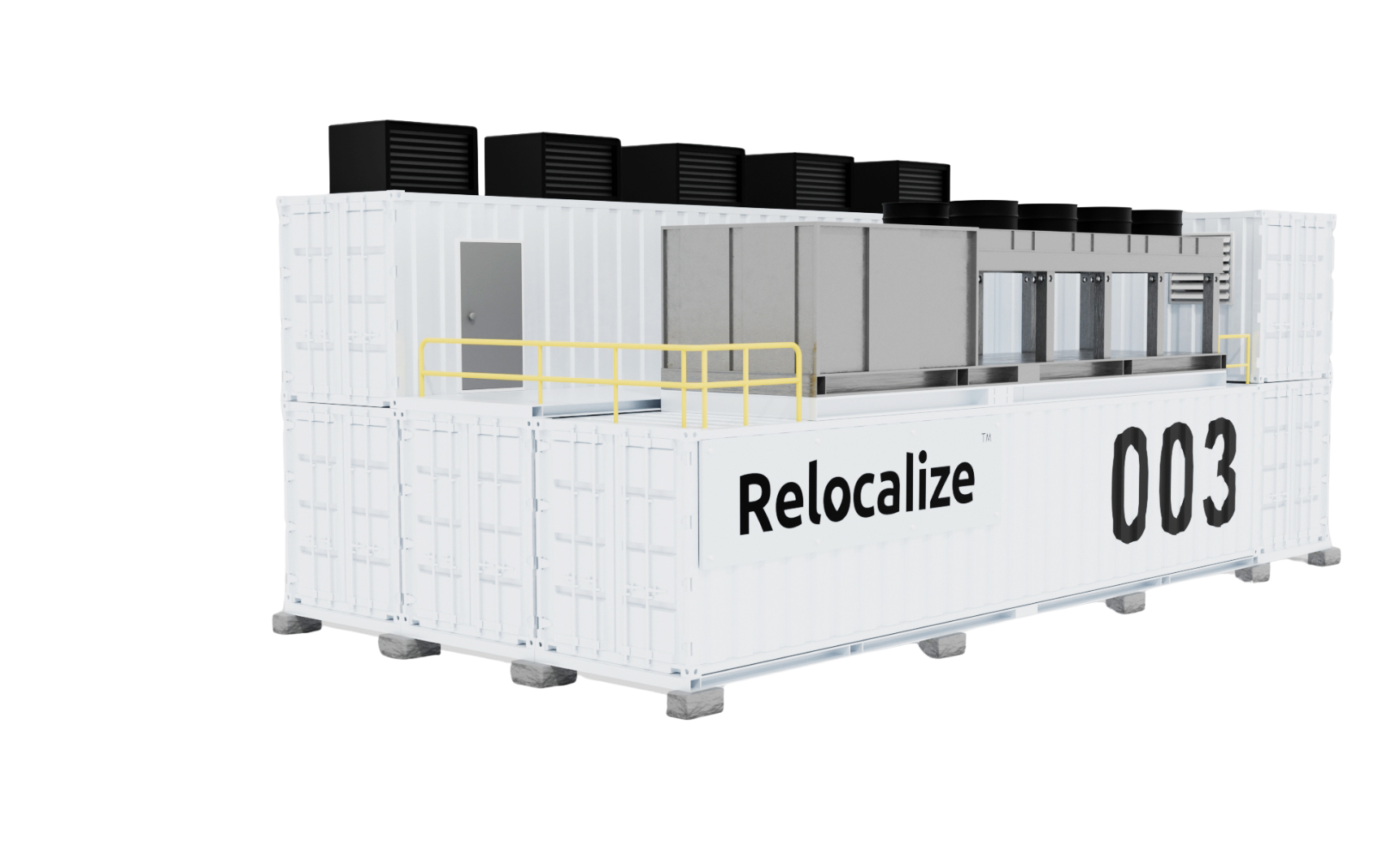
Relocalize’s RELO micro-factories are designed to produce frozen water cold packs in one process, near the pack-out line. That significantly shortens the time from production to delivery, with no separate freezing step at a third-party warehouse (see how long it takes an ice pack to freeze at scale).
Benefits of Relocalize:
- Frozen cold packs produced in one process, near the line
- Much shorter time from production to delivery
- Fewer trucks between the plant and your pack-out line
- 100% water, easy for your customers to dispose of
Want to see how water cold packs perform in your own box? Request a free cold pack sample kit. If you need help with the whole package (box, insulation and coolant), book a free cold chain consultation with Ben and our packaging team.

Cold Pack Shipping FAQ
How long do gel packs last in shipping?
Most gel packs keep a chilled shipment in range for about 24 to 48 hours, depending on insulation, box size and the temperatures along the route. In our third-party lab test, water cold packs stayed below 4 °C for all 72 hours, longer than the gel packs in the same setup. For a method to find your own number, see how long ice packs stay cold in a shipping box.
Do cold packs need to be frozen before use?
Yes. Gel and water cold packs both need to be fully frozen before pack-out. A pack that is only partly frozen runs out of cooling early and can let the shipment warm up before delivery.
What is cold packing?
Cold packing means packing perishable products with insulation and coolants, such as cold packs or dry ice, so they stay within a safe temperature range from your facility to the customer’s door. For a full walkthrough, see how to package refrigerated food for shipping.
Are ice packs or gel packs better for shipping food?
For chilled food, water ice packs are usually the better value. They cost less, are easy to dispose of, and in our lab test they held below 4 °C longer than gel packs. Gel can make sense when you need a pack that stays flexible around irregular items.
Conclusion: Cold Chain Confidence Starts with the Right Pack
Whether you’re shipping salmon fillets, vaccines, or a week’s worth of meals, the cold packs you choose determine product freshness, safety, and brand trust. In 2026, businesses have more options than ever, but also more pressure to be sustainable and efficient.
For chilled goods, water cold packs deliver the best return on investment: low cost, simple disposal, and strong performance over long transits. Producing them near the line, the way Relocalize’s micro-factories are designed to, takes the long lead times out of cold pack supply.