Pharmaceutical cold chain logistics involves much more than placing temperature-sensitive medication in an insulated box with frozen cold packs.
Products may pass through manufacturers, distribution centers, fulfillment facilities, carriers, pharmacies, healthcare providers and customs checkpoints before reaching the patient. Every handoff can introduce the risk of a temperature excursion, delay or handling error.
A reliable cold chain connects packaging, refrigerants, monitoring, operating procedures and contingency planning. This article focuses on the packaging and fulfillment side of pharmaceutical cold chain logistics in North America, including insulated packaging, cold packs, packout procedures and last-mile delivery.
What Is Pharmaceutical Cold Chain Logistics?
Pharmaceutical cold chain logistics is the controlled storage, handling and transportation of medicines and healthcare products that are sensitive to temperature.
These products may include:
- Vaccines
- Biologics
- Injectable therapies
- Insulin and GLP-1 medications
- Clinical trial materials
- Diagnostic kits and biological samples
- Other specialty pharmaceuticals
Required conditions vary by product. Some pharmaceuticals must remain refrigerated, while others require controlled room-temperature, frozen or ultra-low-temperature environments.

For example, vaccines licensed for refrigerated storage are generally stored between 2°C and 8°C, or 36°F and 46°F. However, this range should not be applied universally to every pharmaceutical product. Some refrigerated products can also be damaged by freezing. The CDC’s vaccine storage guidance notes that freezing can permanently reduce the potency of certain liquid vaccines.
The approved product label, manufacturer instructions and product-specific stability data should always determine the required storage and transportation conditions.
Across North America, applicable regulatory requirements depend on the product, jurisdiction and destination. In the United States, federal regulations require prescription drugs to be stored under appropriate conditions in accordance with their labeling or recognized compendial standards. In Canada, Health Canada provides specific guidance for controlling drug products during storage and transportation.
The objective is not simply to make a package cold. It is to maintain the product within its approved conditions throughout distribution.
6 Best Practices for Pharmaceutical Cold Chain Logistics
1. Begin With the Product Requirements
Packaging should be developed around the pharmaceutical product rather than forcing every shipment into a standard configuration.
Before selecting a box, insulated liner or refrigerant, define:
- The approved temperature range
- Whether the product is sensitive to freezing
- Acceptable temperature-excursion limits
- Expected and worst-case transit times
- Payload size and quantity
- Seasonal ambient conditions
- Shipping routes and destinations
- Applicable documentation and quality requirements
Two products with the same general temperature range may still need different packouts.
One may be particularly vulnerable to freezing, while another may be more affected by prolonged heat exposure. Payload dimensions, delivery location, shipping duration and the number of units inside the box can also change the amount and placement of insulation and refrigerant required.
North American shipping routes can cover very different climates. A packout moving through Arizona in July may face different conditions from one traveling through Ontario or Minnesota in January. Cross-border shipments may also encounter additional dwell time at customs or distribution hubs.
The product’s risk profile and actual shipping lane should always be the starting points.
2. Evaluate the Complete Packaging System
A passive pharmaceutical packaging system typically combines several components.
ComponentMain functionOuter boxProtects the shipment during handling and transportationInsulated linerSlows heat transfer between the package and its surroundingsCold packsAbsorb heat and help maintain the required conditionsSpacers or dividersProtect the payload and control contact with refrigerantsMonitoring deviceRecords or indicates conditions inside the package
These components must be evaluated as one system.
Changing the box dimensions, liner thickness, payload quantity, cold-pack weight or refrigerant placement can alter thermal performance. Even a small operational change may create warmer zones, cold spots or a shorter protection period.
Testing should reflect realistic conditions, including:
- Expected and worst-case shipment duration
- Summer and winter temperature profiles
- Packing and staging time
- Carrier delays
- Cross-dock or customs dwell time
- Last-mile delivery conditions
- Route-specific risks
In the United States, 21 CFR 211.142 requires drug products to be stored under appropriate temperature, humidity and light conditions so their identity, strength, quality and purity are not affected.
Health Canada’s guidance for the environmental control of drugs during storage and transportation also addresses the qualification of thermal shipping containers and packouts used to maintain required conditions.
A cold pack should never be evaluated in isolation. Its performance depends on the complete packaging configuration around it.

3. Select and Condition Cold Packs Carefully
Adding more frozen cold packs does not automatically create a better pharmaceutical shipping solution.
Too little refrigerant may allow the product to warm beyond its approved conditions. Too much refrigerant—or direct contact between a frozen pack and a freeze-sensitive product—may create a freezing risk.
Cold-pack selection should consider:
- The required temperature range
- Product freeze sensitivity
- Shipment duration
- Insulation performance
- Payload dimensions
- Cold-pack weight and format
- Placement within the package
- Seasonal ambient conditions
- Disposal or reuse requirements
Conditioning is equally important. The temperature and physical condition of a cold pack when it enters the box can affect the performance of the entire system.
Operating procedures may need to define:
- Freezing temperature
- Minimum freezing time
- Frozen storage conditions
- Maximum time outside the freezer
- Conditioning or tempering before packing
- Pack placement and loading sequence
- Use of barriers or spacers
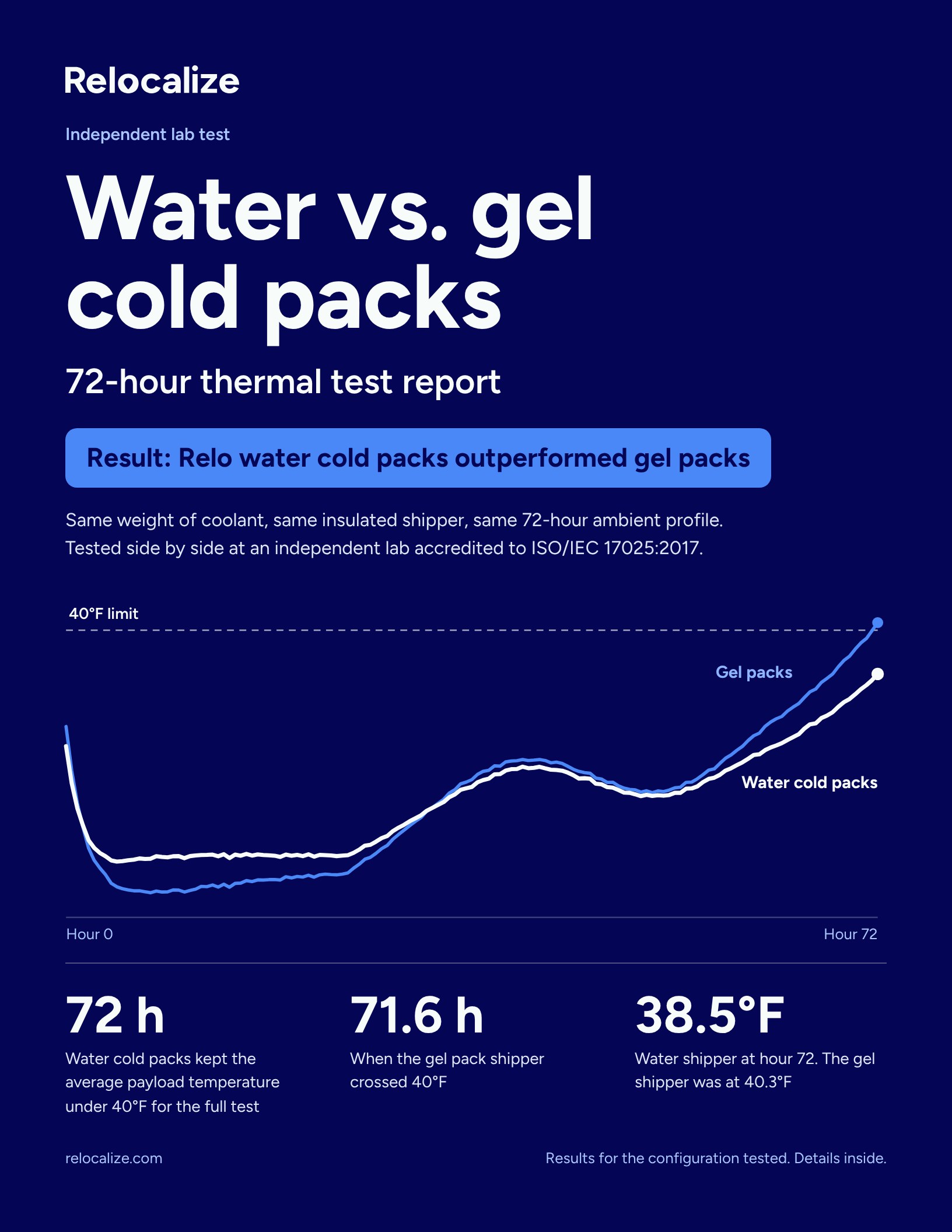
Relocalize offers customizable water cold packs for pharmaceutical and temperature-sensitive shipments, with different weights, dimensions, formats and private-label options.
The complete packout must still be evaluated and qualified for the customer’s product, temperature range, route and quality requirements.
The configuration must also be practical enough for fulfillment teams to reproduce consistently. A packout that performs well during testing may still create risk if it is too complicated to assemble accurately during peak-volume operations.
4. Standardize Packing, Staging and Handoffs
Packaging performance can be compromised before the shipment leaves the facility.
Cold packs may begin warming while waiting to be packed. Completed packages may remain on a loading dock longer than planned. Products may also be staged in areas that are significantly warmer or colder than the facility’s controlled storage space.
Standard operating procedures should cover:
- Removing cold packs from frozen storage
- Assembling the packout
- Loading the pharmaceutical product
- Activating and positioning monitoring devices
- Controlling packing and staging times
- Transferring shipments to the carrier
- Receiving and inspecting deliveries
Employees and logistics partners should understand who can release a shipment, who reviews temperature records and who must respond when a delay or possible excursion occurs.
Standardization reduces variation between employees, shifts, facilities and third-party logistics providers.
It also supports scalability. Seasonal peaks, new product launches and unexpected changes in order volume can rapidly increase cold-pack requirements. A supply model dependent on long lead times and large frozen inventories may struggle to respond without consuming additional cold-storage space.
5. Monitor and Document Shipment Conditions
Temperature monitoring provides evidence of the conditions experienced by a pharmaceutical shipment.
Depending on the product, route and quality requirements, monitoring tools may include:
- Electronic temperature data loggers
- Time-temperature indicators
- Freeze indicators
- Humidity monitors
- GPS-enabled trackers
- Real-time connected sensors
Monitoring devices should be appropriate for the required temperature range, positioned according to the evaluated packout and maintained under documented calibration procedures.
Receiving teams should know:
- When temperature information must be reviewed
- What qualifies as a possible excursion
- When a shipment should be quarantined
- Who has authority to release the product
- How records and investigations will be documented
In the United States, 21 CFR 205.50 addresses appropriate storage temperatures for prescription drugs and the use of temperature- and humidity-recording equipment. The United States Pharmacopeia’s General Chapter <1079> also provides risk-based guidance for storing and transporting temperature-sensitive drug products.
Canadian businesses should follow applicable Health Canada requirements, while companies distributing across borders must account for the requirements of each destination market.
A monitoring device does not protect the product by itself. It provides the information needed to identify possible excursions and make better-supported quality decisions.

6. Plan for Delays, Excursions and Last-Mile Risks
Even a carefully developed packout can encounter unexpected conditions.
Common risks include:
- Extreme heat or freezing temperatures
- Carrier or flight delays
- Equipment failures
- Missed collections
- Customs delays
- Incorrect addresses
- Failed delivery attempts
- Packages left unattended
These risks are especially important for direct-to-patient shipments. A package may remain in a delivery vehicle, apartment lobby, mailroom or outdoor location longer than planned.
Packaging duration should therefore include a realistic contingency period rather than matching only the carrier’s scheduled transit time.
Organizations should also establish a documented temperature-excursion process. When a possible deviation occurs, the affected shipment may need to be quarantined while the quality team reviews:
- The temperature reached
- The duration of exposure
- The affected product and lot
- Available stability data
- Manufacturer guidance
- The condition of the packaging
- Where the deviation may have occurred
A temperature excursion does not automatically mean the product must be discarded. The final decision should be based on product-specific evidence, applicable requirements and the organization’s quality procedures.
Selecting a Pharmaceutical Cold Chain Packaging and Supply Model
The least expensive packaging component does not necessarily create the lowest total shipping cost.
A practical solution must balance:
- Thermal performance
- Product protection
- Packaging and labor costs
- Shipping weight
- Refrigerant preparation
- Frozen-storage requirements
- Waste and disposal
- Ease of assembly
- Scalability across locations
A complex packout may perform well during testing but create errors on a busy fulfillment line. Excess insulation or refrigerant may also increase package size, shipping costs and freezing risk without meaningfully improving protection.
Cold-pack supply is another important consideration. Purchasing pre-frozen packs from a distant supplier can require long lead times, buffer inventory, refrigerated transportation and significant frozen-storage capacity. Building an internal production line provides greater control but introduces capital costs, staffing, maintenance and operational complexity.
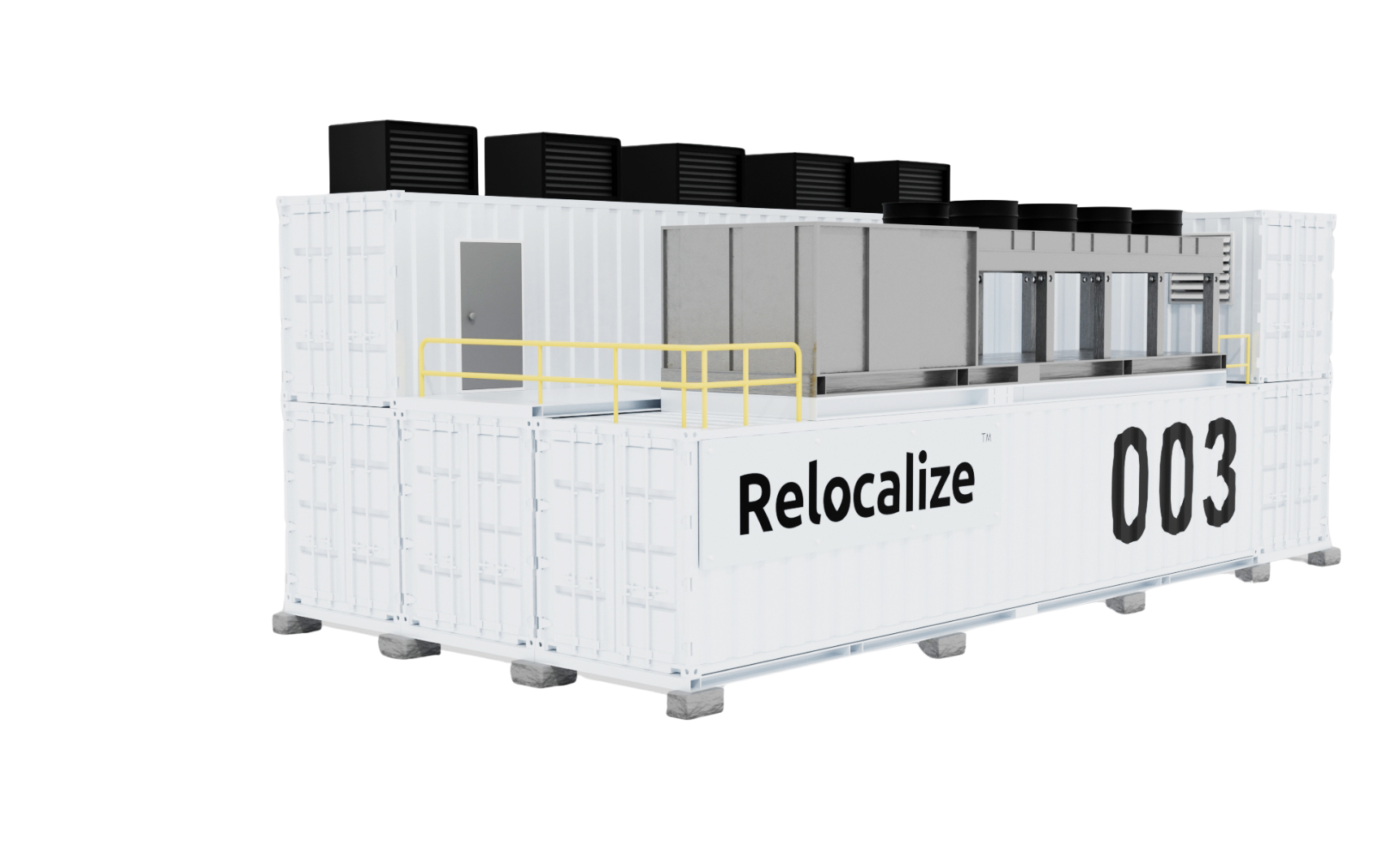
For high-volume operations, on-site cold pack production provides another option. Relocalize’s dedicated system is designed to produce, freeze and palletize cold packs at the fulfillment center. Relocalize manages installation, monitoring, maintenance, production support and supplier management. Its autonomous micro-factory technology enables on-demand supply without requiring the customer to purchase and operate its own cold-pack manufacturing line. The best solution is one that can be evaluated, documented and reproduced consistently under real operating conditions.