A meal kit box has a simple job on paper: get raw proteins, dairy and fresh produce to someone's door still cold. In practice, it is one of the harder pack-outs in food fulfillment. One box carries items with different needs, it often sits on a porch for hours, and the same design has to work in January and in July.
Most teams start with meal kit packaging as a materials question: which box, which liner, how many cold packs. Those choices matter, but none of them decides the outcome alone. Arrival temperature comes from the whole pack-out working together: the box, the insulation, the cold packs, where everything sits, and how long the box spends in transit.
What Does Meal Kit Packaging Need to Do?
Meal kit packaging needs to keep perishable ingredients at refrigerator temperature, 4°C (40°F) or below, from the pack line to the customer's kitchen. It does that through a tested combination of outer box, insulated liner, cold packs and item layout, sized for the transit time and season.
A simple way to picture it:
Outer box + insulated liner + cold packs + item layout + time in transit = arrival temperature
Change any one part and the result changes, so design and test the pack-out as one unit.
What Temperature Should a Meal Kit Arrive At?
A meal kit should arrive at refrigerator temperature or colder. In the US, FoodSafety.gov advises that shipped perishable food should arrive "at least as cold as it would be in a refrigerator (40°F or below)," and that customers should contact the company if it arrives warmer. See FoodSafety.gov's tips for meal kit and food delivery safety for the full consumer guidance.
In Canada, Health Canada gives the same benchmark: keep refrigerators at 4°C (40°F) or lower, and treat 4°C to 60°C (40°F to 140°F) as the danger zone where bacteria can grow quickly. See Health Canada's guidance on safe food storage. Other markets have their own food safety rules and agencies, so check the requirements where you ship.
The USDA's Food Safety and Inspection Service (FSIS) also describes what it expects from mail order perishables: food sent cold or frozen, packed with a cold source, in foam or heavy corrugated packaging, and labeled "Keep Refrigerated." See USDA FSIS guidance on mail order food safety.

For a packaging team, the design target is clear: the warmest item in the box, usually whatever sits farthest from the cold packs, stays at or below 4°C (40°F) until the customer opens it, including time on the doorstep.
How Do You Choose a Box and Liner for Meal Kits?
Start with the outer box and liner, because they set how fast heat gets in. The cold packs can only hold the line for as long as the insulation slows the heat down.
Corrugated outer box:
Carries the load, protects the contents and holds the liner in place. It adds little insulation by itself.
EPS foam coolers:
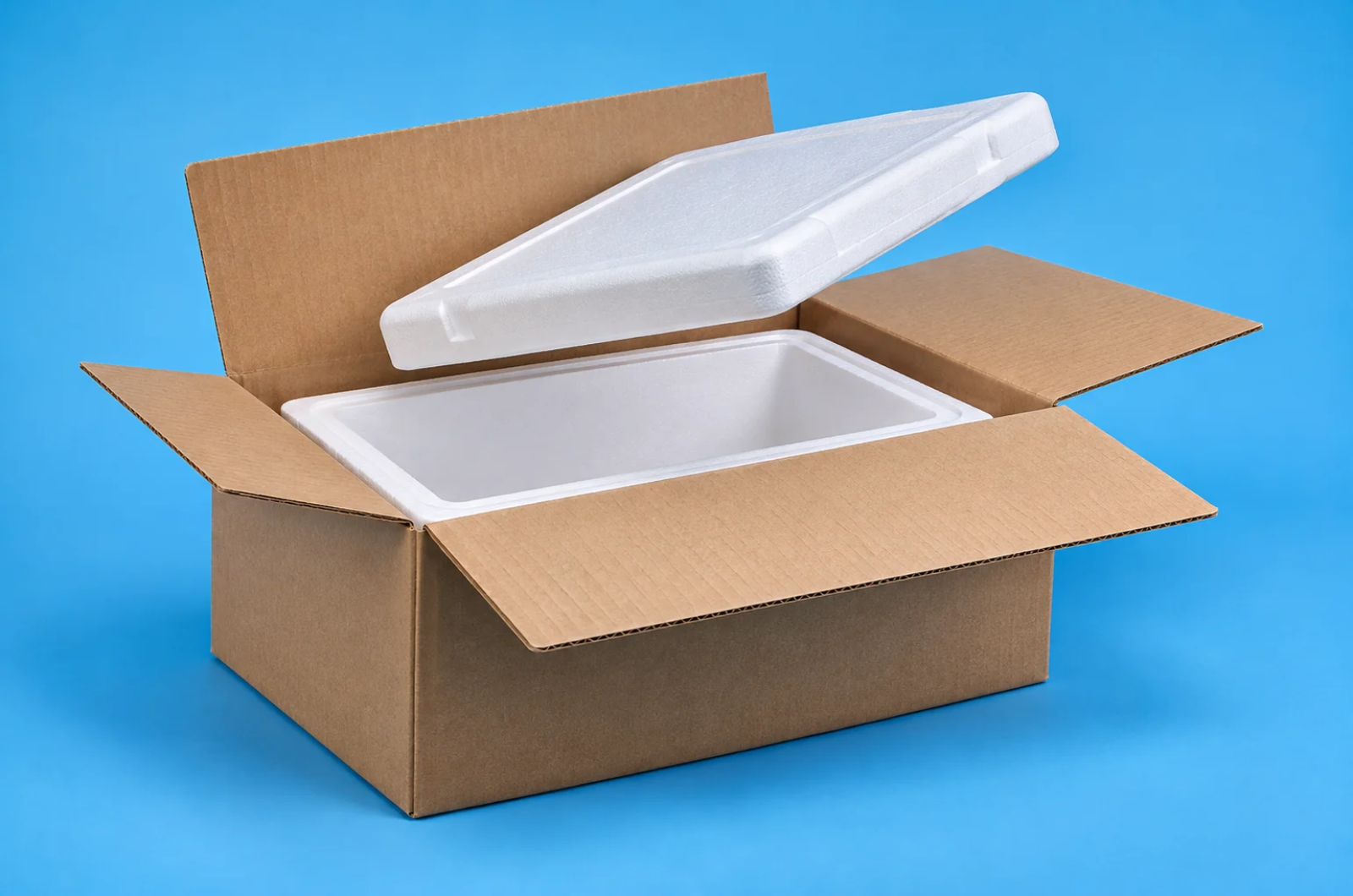
Rigid, well-proven insulation. FedEx, for example, recommends an insulated foam container with walls of at least 1-1/2 inches inside a sturdy outer box for perishables. See FedEx's guidance on how to ship perishables. EPS takes up storage space before packing and can be harder for customers to dispose of.
Insulated liners:
Paper-based, fiber, recycled cotton or foam liners that sit inside a standard box. They ship flat to the fulfillment center and can be easier on the pack line. Performance varies widely by material and thickness, so test before switching.
Box size and void space:
Empty space inside the liner holds warm air and lets items shift away from the cold packs. A right-sized box with little void is easier to keep cold than an oversized one.
If you are weighing these options, our guide to insulated box liners vs EPS coolers compares them on thermal performance, storage, pack line speed and EPR exposure.
How Many Cold Packs Does a Meal Kit Need, and Where Do They Go?
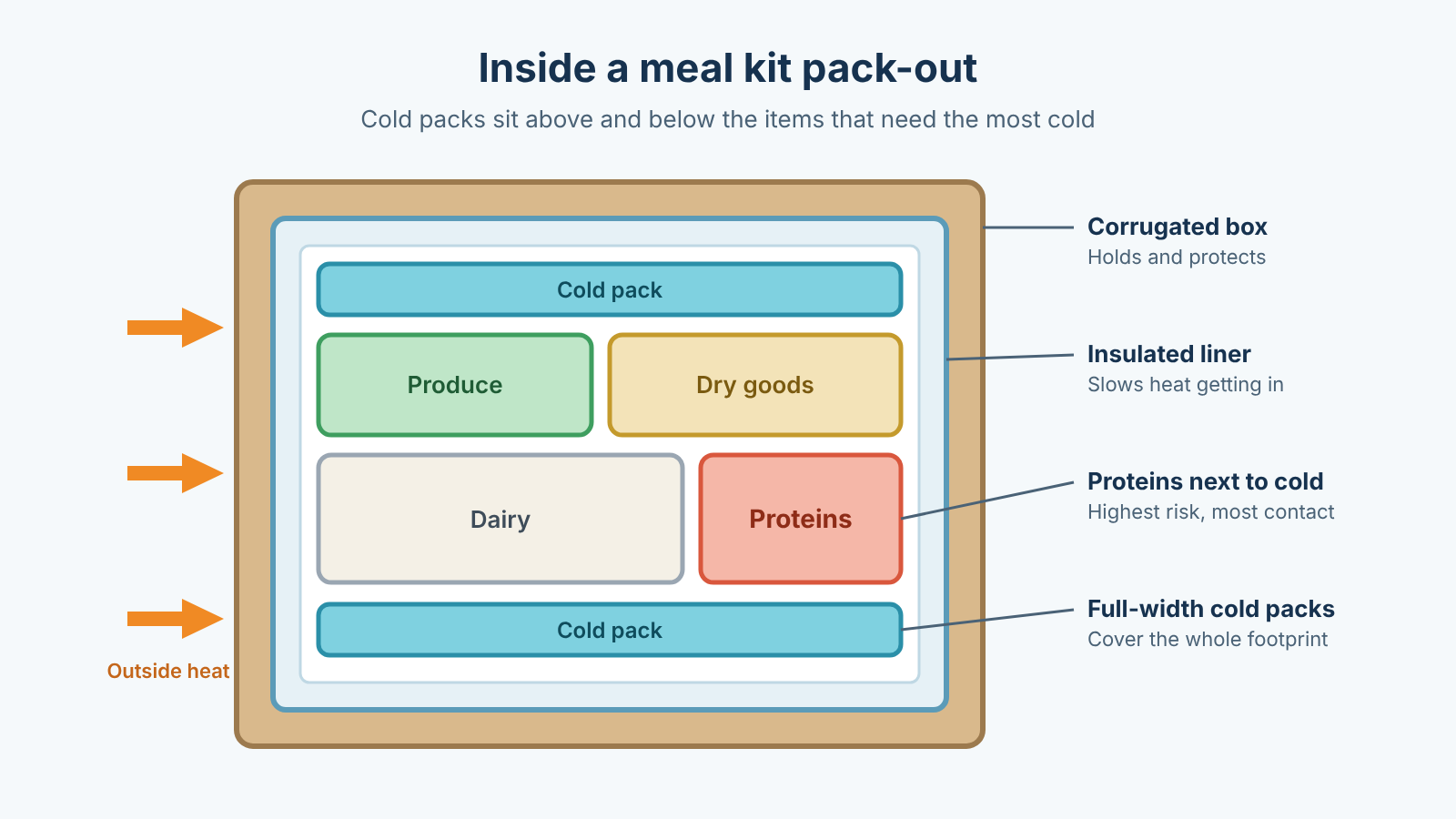
The right number of cold packs is the smallest set, in the right places, that keeps every item at or below 4°C (40°F) for your longest lane in your hottest season. There is no universal count, so it has to come from testing. Placement often matters as much as quantity:
1. Map the box by temperature risk
Group items by how sensitive they are. Raw meat, poultry and seafood carry the most risk. Dairy comes next. Whole produce, dry goods and sauces can usually sit farther from the cold source.
2. Put proteins in direct contact with the cold packs
Place cold packs above and below the protein layer where possible. Cold air sinks, so a pack on top helps, and a pack underneath protects against heat coming up through the base.
3. Keep delicate produce from freezing
Leafy greens and herbs can be damaged if they touch a frozen pack directly. Use a bag, a divider or a layer of other items between them.
4. Match the pack to the box footprint
A cold pack that covers the full width of the liner cools more evenly than a smaller pack that leaves warm edges. Custom pack sizes that fit your box can reduce gaps and void space.
5. Plan seasonal pack-outs
A summer pack-out and a winter pack-out are rarely the same. Many shippers keep two or three seasonal configurations and switch by lane and forecast.

For a deeper look at hold time, see how long ice packs stay cold in a shipping box.
Gel vs Water Cold Packs: Does It Matter for Cooling Performance?
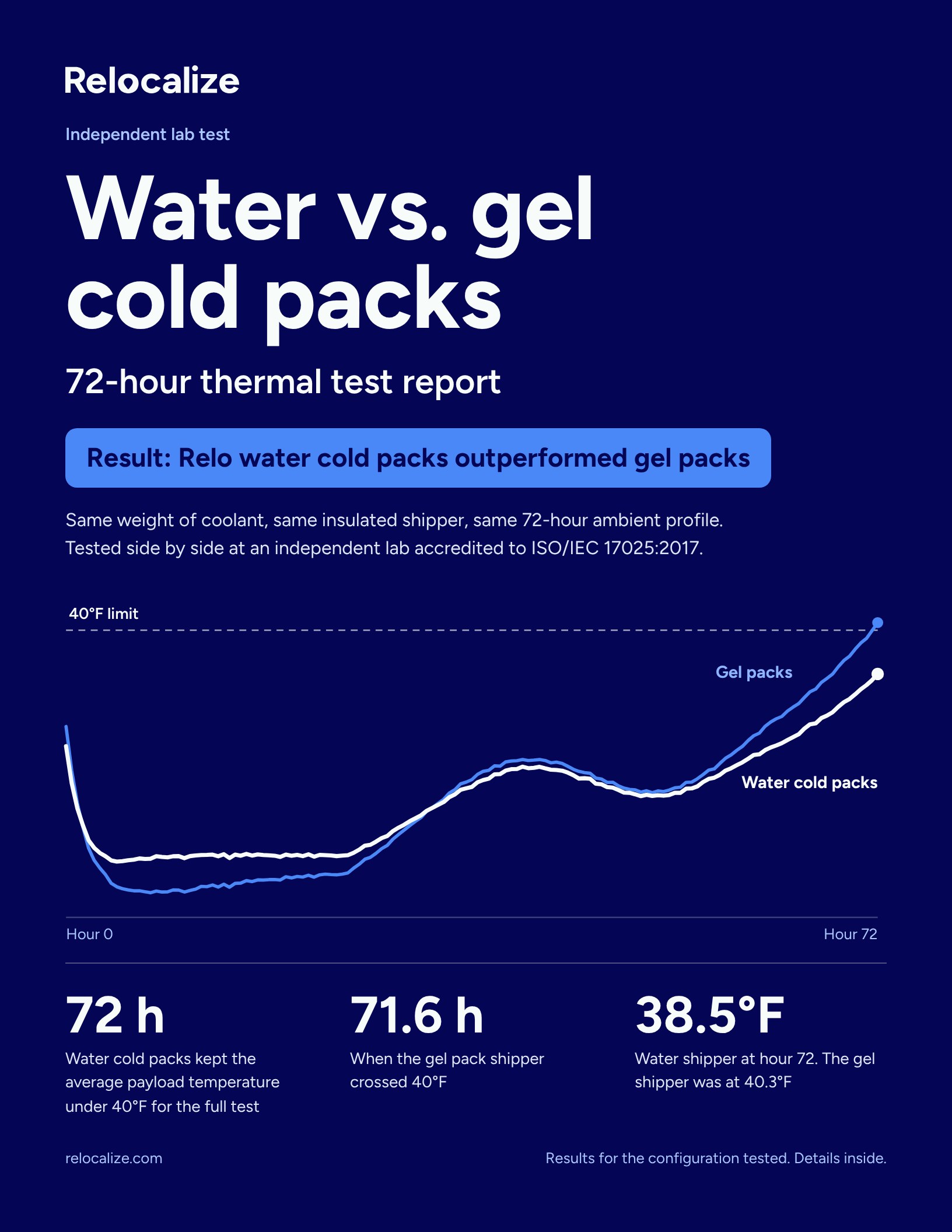
Gel is not automatically better for cooling. In both gel and water cold packs, it is the frozen water that does most of the cooling as it melts, while the gelling agent mainly changes the texture of the pack.
In one specific 72-hour test configuration in meal kit packaging, Relocalize water packs stayed within the protective temperature window longer than conventional gel packs before crossing 4°C. The testing was done by an A2LA-accredited laboratory under ISO/IEC 17025:2017. Results in other boxes, liners and conditions can differ, so your own pack-out still needs testing.
You can request the full lab report, with the temperature data, here.
How Do You Keep Meal Kit Boxes Clean, Dry and Leak-Free?
A clean, dry box starts with sealed components and a plan for condensation. As frozen packs thaw, moisture can form on their surface and on cold items, and a damp box makes a poor first impression even when the food is safe.
- Seal raw proteins:
Bag or tray-seal meat, poultry and seafood so juices stay contained. - Plan for condensation:
FedEx suggests lining the container with a watertight plastic liner for items that can melt or thaw, and adding absorbent material to catch liquid. - Check film quality:
Ask what the cold pack film is made from. Food-grade film matters when packs sit next to food. - Think about contents:
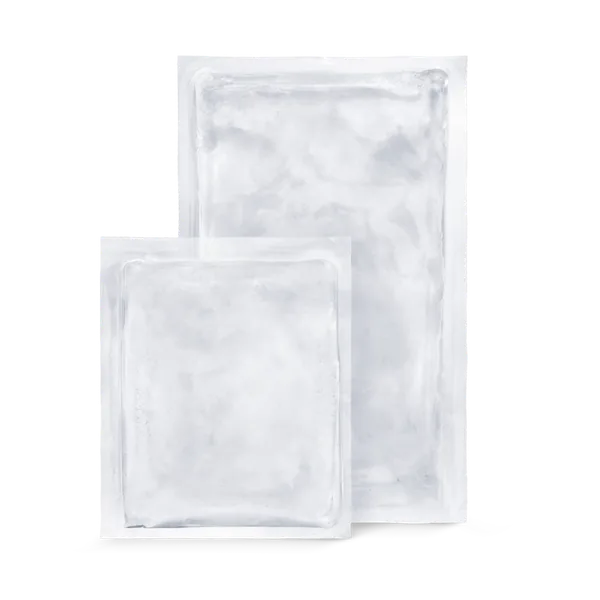
Water-only packs contain no gelling agents, additives or coloring, so food teams know what is inside.
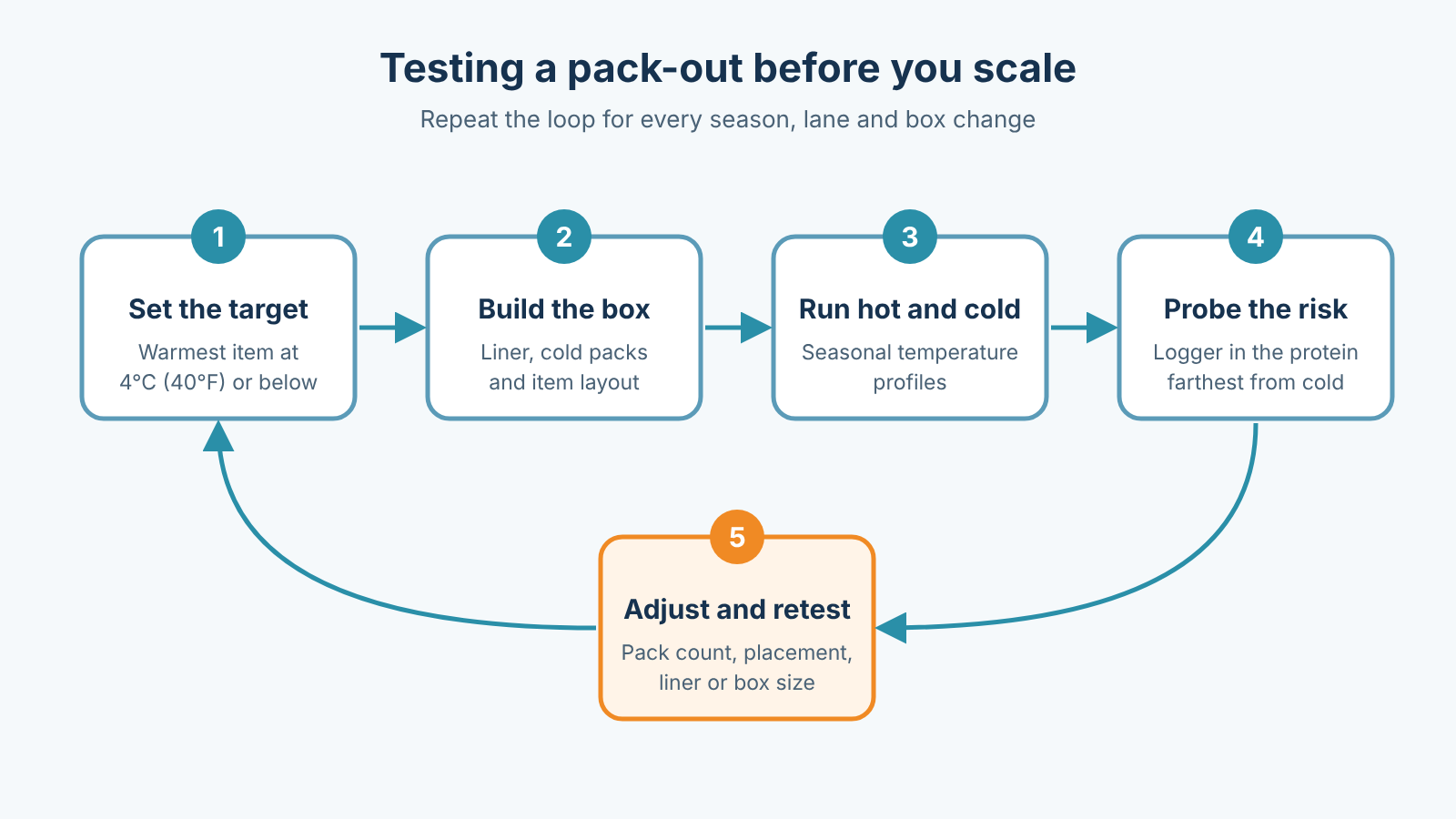
How Do You Test a Meal Kit Pack-Out Before Scaling?
Test the pack-out under conditions that match your real lanes before rolling it out. A test that only runs at room temperature can hide problems that show up on a hot porch or in a cold truck.
- Use realistic profiles:
ISTA 7E is a testing standard for thermal transport packaging shipped through parcel delivery, with temperature profiles meant to represent seasonal highs and lows. See ISTA's list of test procedures. - Probe the riskiest items:
Put temperature loggers in the warmest spot, usually the protein farthest from a cold pack. - Test full and partial boxes:
A box with fewer meals has more void space and can behave differently. - Add margin:
FedEx advises protecting products for at least 24 hours beyond the delivery commitment time when you do not use a next-day service. - Retest after changes:
A new liner, box size, menu mix or cold pack supplier is a new pack-out.
What About Disposal and Packaging Claims?
Disposal is part of the customer experience and, increasingly, of the cost. Extended producer responsibility (EPR) programs, which make brands pay for the packaging they put on the market, are in place or in development in a growing number of jurisdictions.
Be careful with environmental claims on your packaging. In the US, the FTC's Green Guides say marketers should qualify recyclable claims when recycling facilities are not available to at least 60 percent of consumers or communities where the product is sold. See the FTC's summary of the Green Guides. Other countries have their own rules on green claims.
For cold packs, water-only packs give customers a simple step: the water can be drained, and the film is handled under local waste management guidelines. Our guide on how to dispose of gel packs covers gel disposal in more detail.
Questions to Ask Your Cold Pack Supplier
Compare suppliers on what affects your boxes, not just price per pack:
- What is inside the pack, and is the film food-grade?
- Can you match pack weight, dimensions and format to our box and liner?
- Can you offer private-label printing?
- How are packs delivered to our dock, and how much handling do they need before the pack line?
- What testing data can you share, and under what conditions was it collected?
- How do you support seasonal changes in volume?
- What disposal instructions can we give customers?
The Hidden Cost in Meal Kit Cold Pack Supply
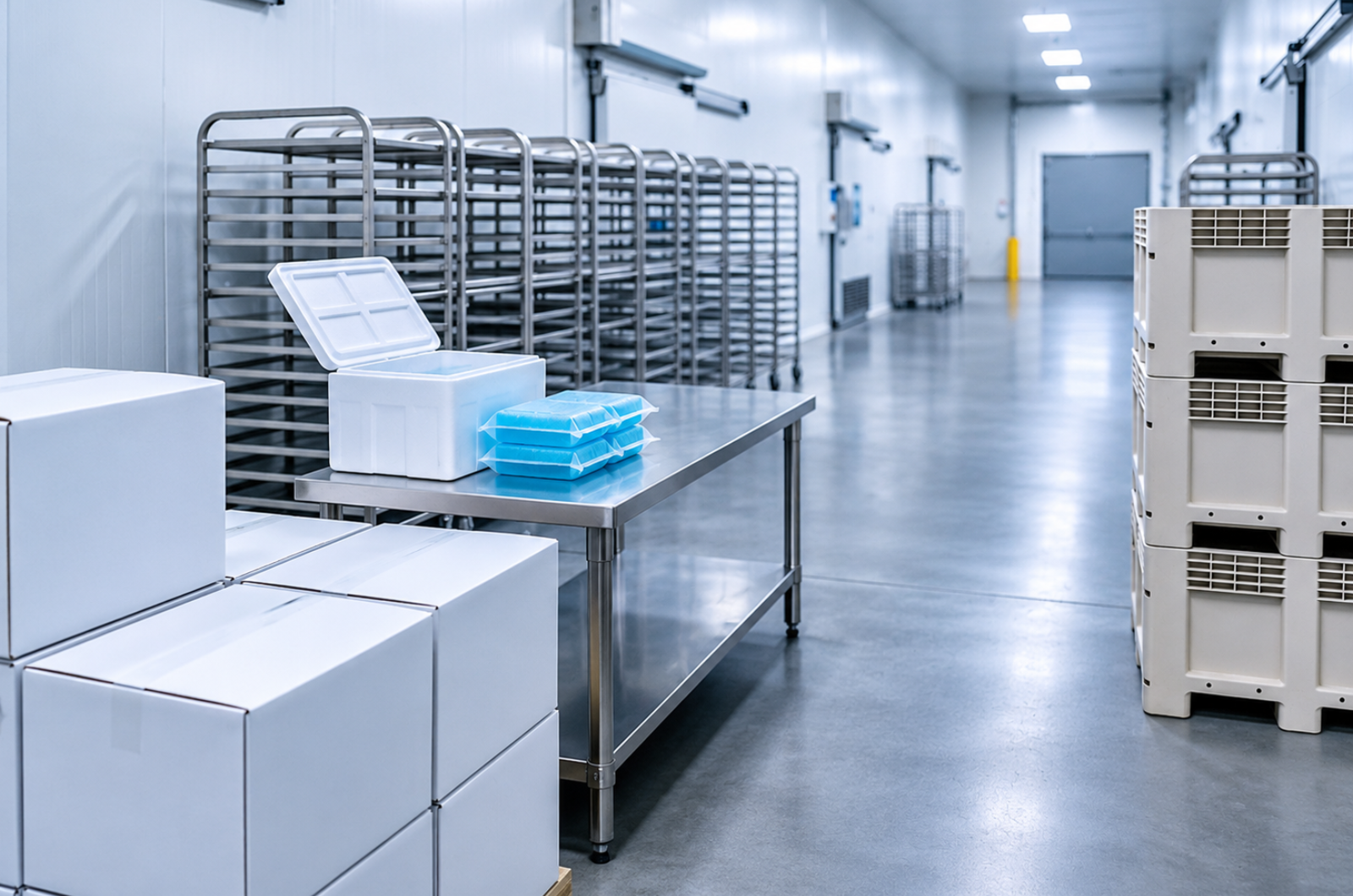
The cold pack itself is only part of what it costs. Frozen packs are heavy, they need freezer space at the fulfillment center, and they often pass through several trucks and a cold storage warehouse before they reach the pack line. When order volumes jump, buffer inventory and supplier lead times can become a constraint, especially for meal kit brands with weekly demand swings.
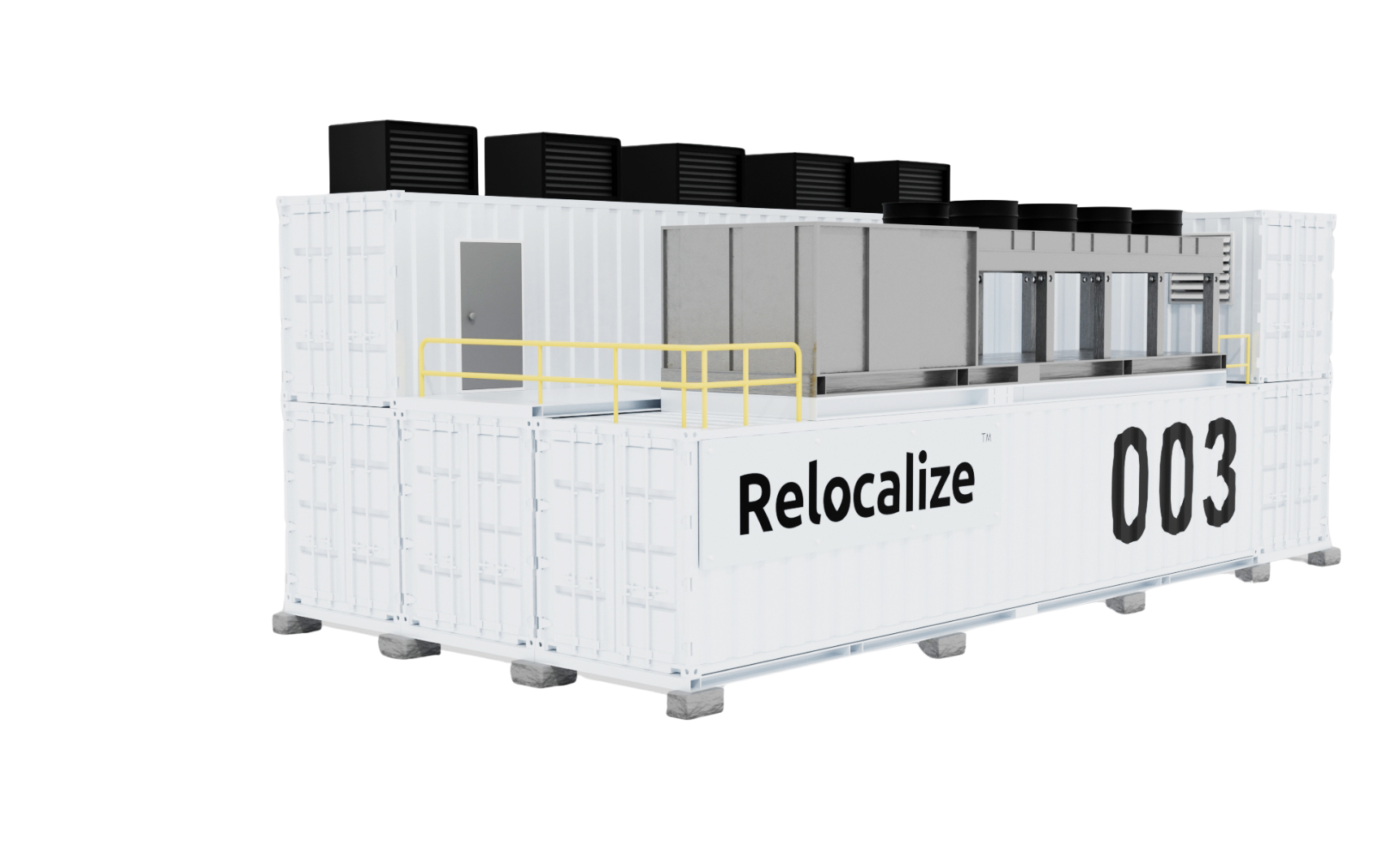
Relocalize makes 100% water cold packs with no gel, additives or coloring, sealed in food-grade film, in customizable weights, dimensions and formats, with private-label printing. For qualifying high-volume operations, a Relocalize on-site autonomous micro-factory can produce, freeze and palletize packs at or near the fulfillment center, reducing long-distance frozen-pack transport, cold storage transfers, buffer inventory and supplier lead times. Relocalize manages installation, monitoring, maintenance and production support, and works with a network of cold chain packaging partners on boxes, liners and pack-out configurations. Learn more about our cold packs for meal kits and food fulfillment.
Meal Kit Packaging That Keeps Every Box Cold
Good meal kit packaging is a system, not a single component. Set a clear target of 4°C (40°F) or below for the warmest item, choose a box and liner that slow heat gain, place cold packs where the riskiest items need them, and test every configuration against your real lanes and seasons.
If you are reviewing your pack-out or your cold pack supply, explore Relocalize cold packs or get in touch with our team.
FAQ
What is meal kit packaging made of?
Meal kit packaging usually combines a corrugated outer box, an insulated liner or foam cooler, frozen cold packs and sealed bags or trays for individual ingredients. The exact mix depends on the menu, transit time and season, and each combination should be tested before it is used at scale.
How do meal kits stay cold during delivery?
Meal kits stay cold because insulation slows heat getting into the box while frozen cold packs absorb the heat that does get in. Placing cold packs next to proteins, reducing void space and matching the pack-out to the season all help keep the warmest item at or below 4°C (40°F).
How many ice packs go in a meal kit box?
There is no standard number. The right count depends on box size, liner, product mix, transit time and outside temperature. Most shippers find it through pack-out testing, then keep separate summer and winter configurations so they are not over-packing in cool months.
Are water cold packs safe for meal kit packaging?
Water cold packs contain only water inside a sealed film. When that film is food-grade and the packs are placed so they do not damage delicate items, they are a straightforward choice for meal kits. As with any cold pack, test the full pack-out for your product and lanes.
What temperature should meal kit food be when it arrives?
US food safety guidance says shipped perishable food should arrive at 40°F (4°C) or below, and Health Canada sets the same 4°C (40°F) benchmark for refrigerated food. Other markets have their own guidance. If food arrives warmer, customers are advised not to eat it and to contact the company.
How do you reduce waste in meal kit packaging?
Right-size the box to cut void space, choose insulation customers can dispose of easily where they live, and use seasonal pack-outs so you do not send more cold packs than a lane needs. Give customers clear disposal instructions for each component.