Grocers have experienced a tough and tumultuous time, most recently grappling with high inflation and continued supply chain issues. What will the future of grocery stores look like as retailers battle market factors and an overarching pressure to become more sustainable to meet regulatory, investor, and consumer expectations?
As we approach 2025, the answer to grocers’ challenges may come from new supply chain, logistics, and sourcing efficiencies and be significantly augmented by the raft of emerging technologies available to those willing to innovate.

Technology is Reshaping the Industry
Deloitte’s Future of Grocery Retail Report in late 2023 summed up a shift in what has been predominantly a supply-driven industry and pinpointed the “exponentially more powerful technology” that could quickly reshape the grocery industry:
“Dark stores with robotic pick and pack, app-guided and virtual and augmented reality (VR/AR) shopping, generative artificial intelligence (Gen AI) personalized content, onsite vertical farms, lab-grown meat, autonomous trucks, advanced tracking and traceability, last-mile delivery, and frictionless checkout are just a few of the initiatives competing to revolutionize grocery and the shopping experience.”
The consultancy firm says the right mix of the shopping experience, store format, service models, and “technological wizardry” will vary for each retailer as the industry shifts to “demand-driven.”
Deloitte hints at the opportunity of in-store vertical farming as one option to provide locally sourced products and the potential for private-label brand growth. It outlines the threat of natural disasters due to weather events and the need to manage supply volatility and shortages. It also describes the move from “mass to micro.” In this latter shift, “fresh and differentiated offerings” become the center of the in-store experience, and grocers are developing new models to create value.
Hyper-personalization in grocery retail is not just acutely matching products to the customer, but also adapting stock to community-specific preferences and a “seismic shift” in how grocery supply works.
Stewart Samuel, IGD’s director of retail futures, explained to Grocery Business that distribution centres are seeing a technological shift. Retailers are using robotics and automation to address staffing challenges, and these optimizations feed down to the store level. Samuel also discusses the potential of intelligent pallet building, drone deliveries, demand planning algorithms, dynamic pricing, and even the use of exoskeleton suits by wholesaler Himbert to help warehouse workers lift heavy crates. All these innovations will likely be common features of the future grocery store.

Pursuing New Ways to Create Value
McKinsey’s “State of Grocery in North America 2023” echoes many of Deloitte’s sentiments and says, “CEOs should be prepared to act aggressively,” adding:
“The best-performing grocery retailers are those that consistently focus on innovation and pursue new ways to create value.”
This report also expects more robust private-brand offerings, diversification, and “the integration of generative AI, and sustainability as a driver of top- and bottom-line results.”
McKinsey’s study found that most consumers across all income groups were assured that private brands were equal to or superior to national brands in quality and value. This perception further opens the door to new sourcing strategies.
Unsurprisingly, CEOs expect consumers to prioritize sustainability in their purchasing decisions. By 2030, over 15 new sustainability-related regulations will be implemented, the majority of which relate to limiting food waste and packaging and improving labeling. Grocery retailers must adapt.
Sustainability and Resilience
Grocers' focus on fresh foods is evident as they strive for sustainability. Any inefficiencies, supply chain issues, and delays quickly result in spoilage and waste. Then, of course, there are concerns over the volume and type of packaging used for fresh foods. Deloitte’s Canada-oriented report Fresh, focused, and sustainable: The role of the grocery store, describes a “great transformation” for grocery stores post-COVID-19. More and more consumers are “focusing on the impact of their food decisions on environmental sustainability,” accelerating the rate of change for food retailers and consumer packaged goods companies and leading them to realign strategies and operations. The report reveals that most consumers want to know where their food comes from, and 42% plan to increase their spending on locally sourced produce.
Although food waste initiatives like Flashfood, FoodHere, and Too Good To Go help with upcycling, they don’t tackle fresh food waste at the source, preventing expiring inventory. This is where innovations that combine new technologies enable the fast on-site processing of local produce come in. Automation not only adds efficiency and cost savings but doubles down in preventing backlogs that might occur due to labor shortages.

Hyperlocal Food Systems and Autonomous microfactories
In Deloitte’s survey, seven out of 10 grocery executives expect to shift food supplies from global to more local, taking advantage of an opportunity to limit food miles and food waste and provide fresher food on demand.
As Deloitte describes a mass-to-micro shift, McKinsey hints at micro fulfillment centers. This means more processing activity locally at retail locations or distribution hubs and will further create a demand for labor that automation can fulfill. So, how could this work?
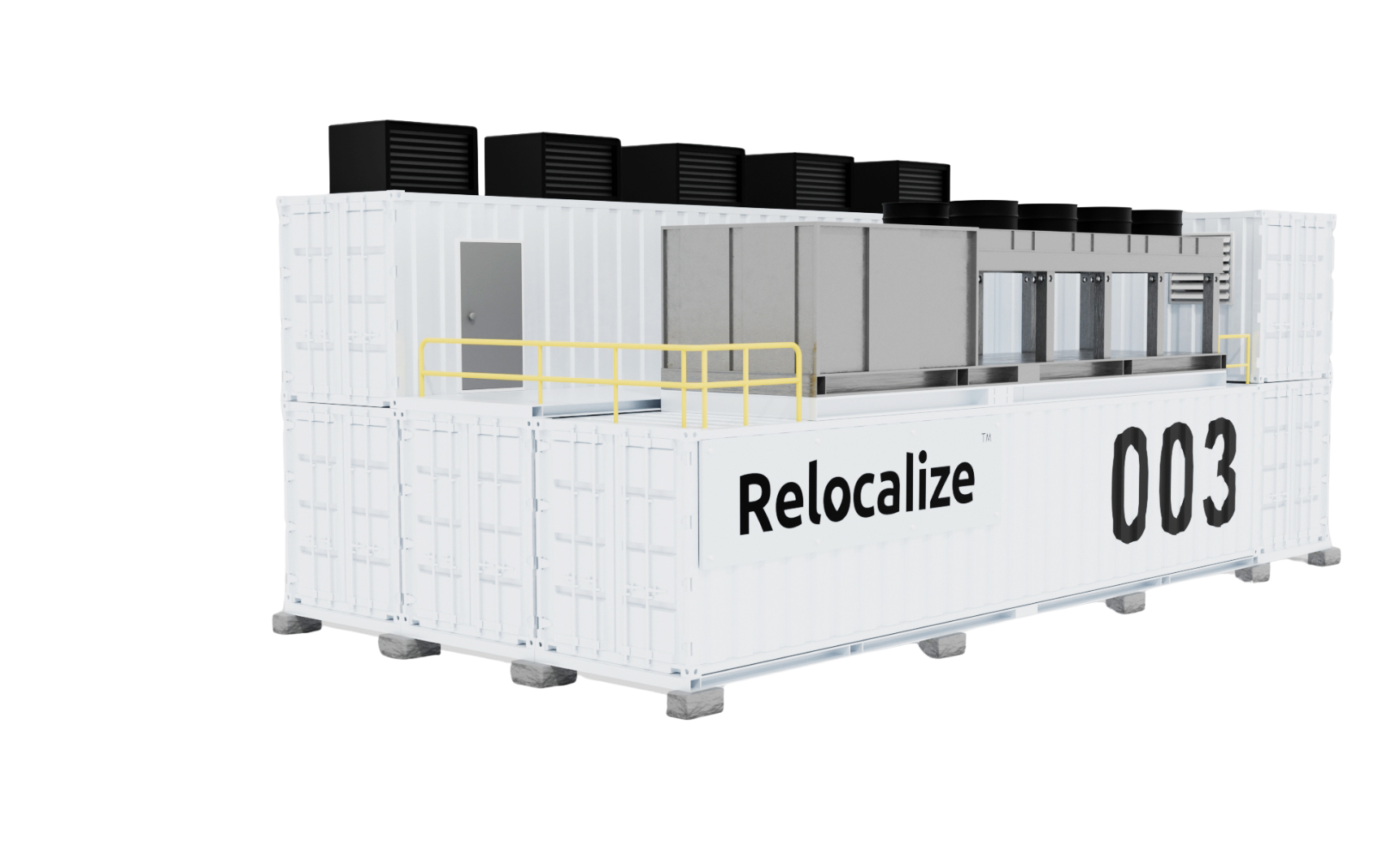
With Relocalize, we’re building the future of food, one-step journeys from micro-factory direct to customers and retail stores. Using advanced technologies like AI and automation, we’re creating a better, hyper-local food supply system that empowers retailer and consumer sustainability goals and can make private-label production acutely local.
Relocalized micro-factories can be deployed in distribution centers or at retail locations. Automated deployable systems solve labor challenges and reduce expenses, but they also make a distributed production model possible at scale for any retailer of any size. Hyper-localizing, including novel waste-reduction solutions, cuts CO2, packaging, water, and food waste.
Get in touch today to learn how Relocalize’s distributed network of micro-factories will help grocery retailers achieve a sustainable and profitable future.