The global food supply chain is incredibly complex and filled with inefficiencies and vulnerabilities, as highlighted by the COVID-19 pandemic and underscored by geopolitical factors, changing international trade policies, extreme weather events, and rising inflation, as seen in recent food price increases. Optimizing the food supply chain is critical for mitigating these challenges for retailers and reducing the industry’s environmental footprint.
A study comparing the environmental impact and economic output of 276 manufacturing sectors across the United States found that the food manufacturing sector is responsible for the highest environmental impacts and economic output, accounting for over 20% of GHG emissions, energy use, and water withdrawals, and about 12% of economic output—both higher than those of motor vehicle manufacturing. Optimizing these food supply chains is essential for developing a sustainable economy in North America.

Why Does the Food Supply Chain Need to be Optimized?
An efficient, robust food supply chain is not only more sustainable and resilient to unexpected events but also more profitable.
The price of food at the grocery store reflects more than just the cost of production. It includes all the elements of the food supply chain that ensure food reaches us in the right form, at the right time, and in the right place.
Between the farm and the consumer, there are processors, graders, packing facilities, transporters, wholesalers, retailers, and others, each with their own expenses, such as overhead and labor costs.
For example, if the price of potato chips rises by 50 percent, it doesn’t necessarily mean the cost of potatoes increased by that amount. It could be due to a rise in labor costs at some stage in the supply chain, which then impacts the final price. The more complex, inefficient, or unreliable the food supply chain is, the more likely these additional costs will be passed on to retailers or consumers.
Food supply chain optimization can reduce emissions and food waste, lower costs, and deliver a better product to the consumer. Food retailers can benefit from being first movers and sustainability leaders in this sector, demonstrating social responsibility, preserving the environment, and building trust with customers.

How can the Food Supply Chain be Optimized?
Any supply chain can be optimized with effective design, meticulous planning, and exceptional execution; new technologies power each of these elements. However, technology can also now accentuate food systems and supply chains with revolutionary new initiatives set to change outdated, vulnerable, and overly lengthy networks entirely.
- Augmented agriculture
Food system optimization begins with agriculture, making more efficient use of agricultural land but particularly using AI and predictive analytics to optimize land use, improve crop yield and manage the impacts of climate change. IoT sensors can be used in traditional farming and new indoor and vertical farming techniques to improve crop production and care.
- Storage, distribution, and logistics
IoT sensors and AI also have a part to play in monitoring and maintaining optimal storage conditions to reduce spoilage and protect goods in transit. GPS, AI, data analytics, and forecasting all combine to optimize distribution routes and minimize delivery times, even in times of disruption.
- Transparency
Blockchain technology provides an opportunity for producers, retailers, and consumers to openly and reliably track and trace the origins and food miles associated with the products that are manufactured and sold. This transparency can build trust for food processors and consumers and provide accurate information to enable optimization.
- Inventory and waste management
Around 10% of global GHG emissions have been attributed to food waste. Identifying potential waste scenarios also makes it easier to donate, recycle, or compost surplus effectively and sustainably.
Demand planning or demand sensing uses AI and machine learning to improve accuracy and predictability and reduce uncertainty. Walmart, for example, uses a weekly demand-sensing system to improve inventory forecasting and accuracy for its stores in North America.
- Local and circular initiatives
Localization and circular food economy initiatives reduce food miles and emissions and provide fresher, healthier produce to consumers. Farmers, local producers, and farmers markets are not the only ones who have a role in relocalization. Grocers can take advantage of new technologies to process local food at retail sites and at scale to join local growers and makers in presenting sustainable, in-demand products to increasingly savvy and expectant consumers.
Local or decentralized initiatives make for resilient and diversified supply chains where a distribution or retail network can be more protected from a single event, such as an adverse weather impact at a primary manufacturing or processing location.

What Tools or Methods can Grocers Use?
Technology is truly transforming food systems and supply chains, enhancing efficiency, safety, and sustainability, improving quality, and fostering consumer engagement. Automation, artificial intelligence, data analytics, robotics, blockchain, smart sensors, and IoT devices all have a role in food supply chain optimization.
Exciting food manufacturing technologies include smart manufacturing and quality control techniques, production line robots, and predictive analytics systems for acute optimization, right from crop growth to inventory management and distribution.
Hyperlocal food systems
By far, one of the most exciting new innovations for grocers is hyperlocal food systems, which combine several new technologies to enable distributed or decentralized food production at scale.
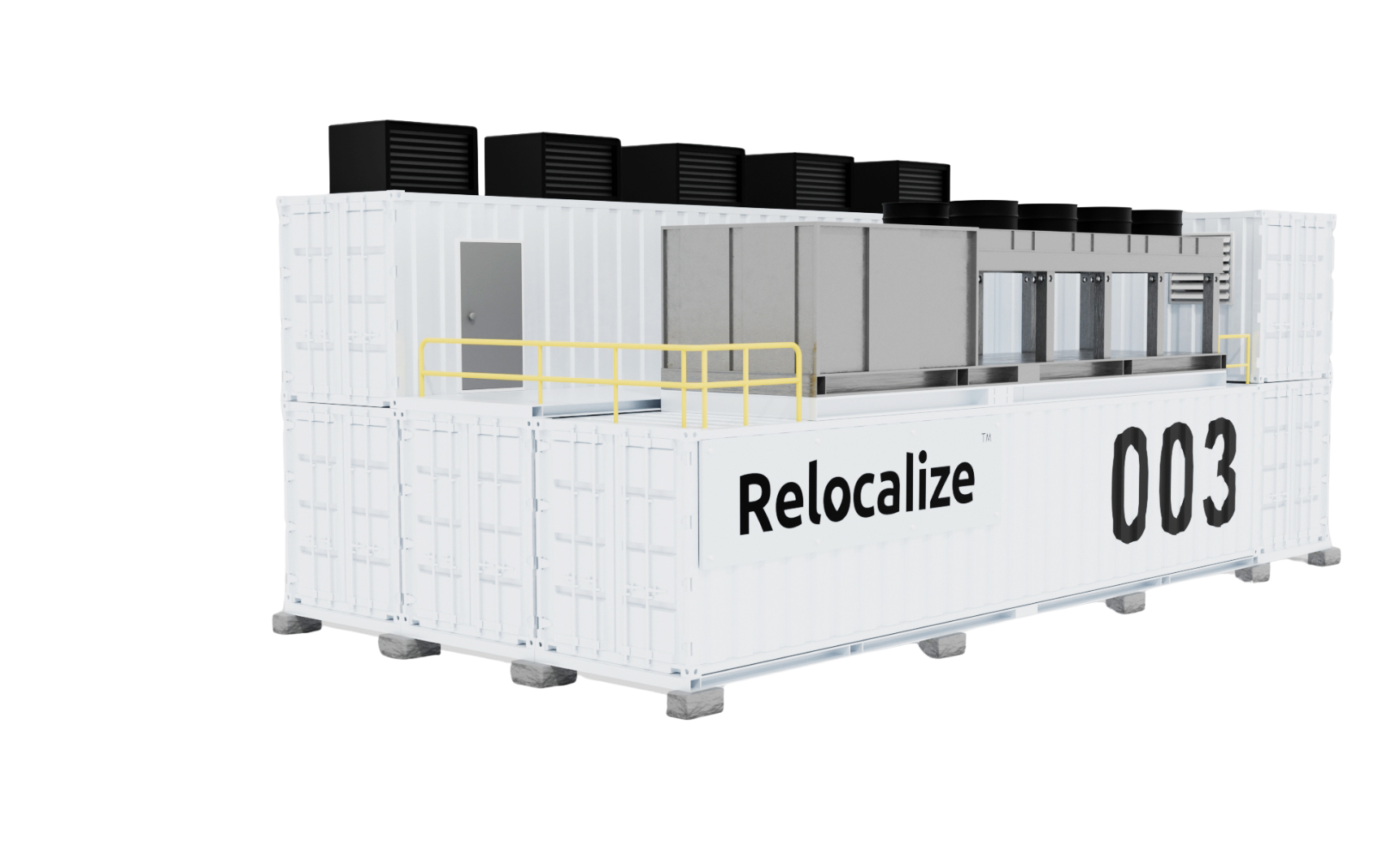
Relocalize facilitates food makers and retailers with localized manufacturing in the form of autonomous micro-factories that can produce and process food and beverages on-site, locally, but at a quickly replicable, global scale. Relocalize can decentralize production or packaging, eliminating middle-mile transportation costs and emissions and building resilient food supply chains that attract consumers seeking grocers that offer sustainable solutions.
Relocalize, out of Quebec, Canada, integrates several exciting technologies, including robotics and AI, into its technology platform and micro-factories for higher-quality products at lower costs, ready for mass production by 2025. We’ve been awarded Food Solutions Company of the Year in the SupplyTech Breakthrough Awards.
In May 2024, we closed a seed funding round led by Desjardins Capital, which raised $5.8 million to scale our autonomous microfactory platform that enables microfactories to be deployed at distribution centers or retail sites for hyperlocal production. Decentralized production optimizes food supply chains but also de-risks food systems, ensuring global impacts aren’t felt simultaneously at every grocer’s location.
We’re currently working to double our engineering team to meet strong demand from retailers in the packaged ice market segment. To learn more or get in touch, visit relocalize.com.